CCTV Cameras & Video Surveillance Systems in Egypt: A Complete Guide for Safer, Smarter Infrastructure
A practical guide to CCTV cameras, IP surveillance, PTZ systems, AI analytics, VMS platforms, and how organizations in Egypt can choose the right video surveillance architecture.
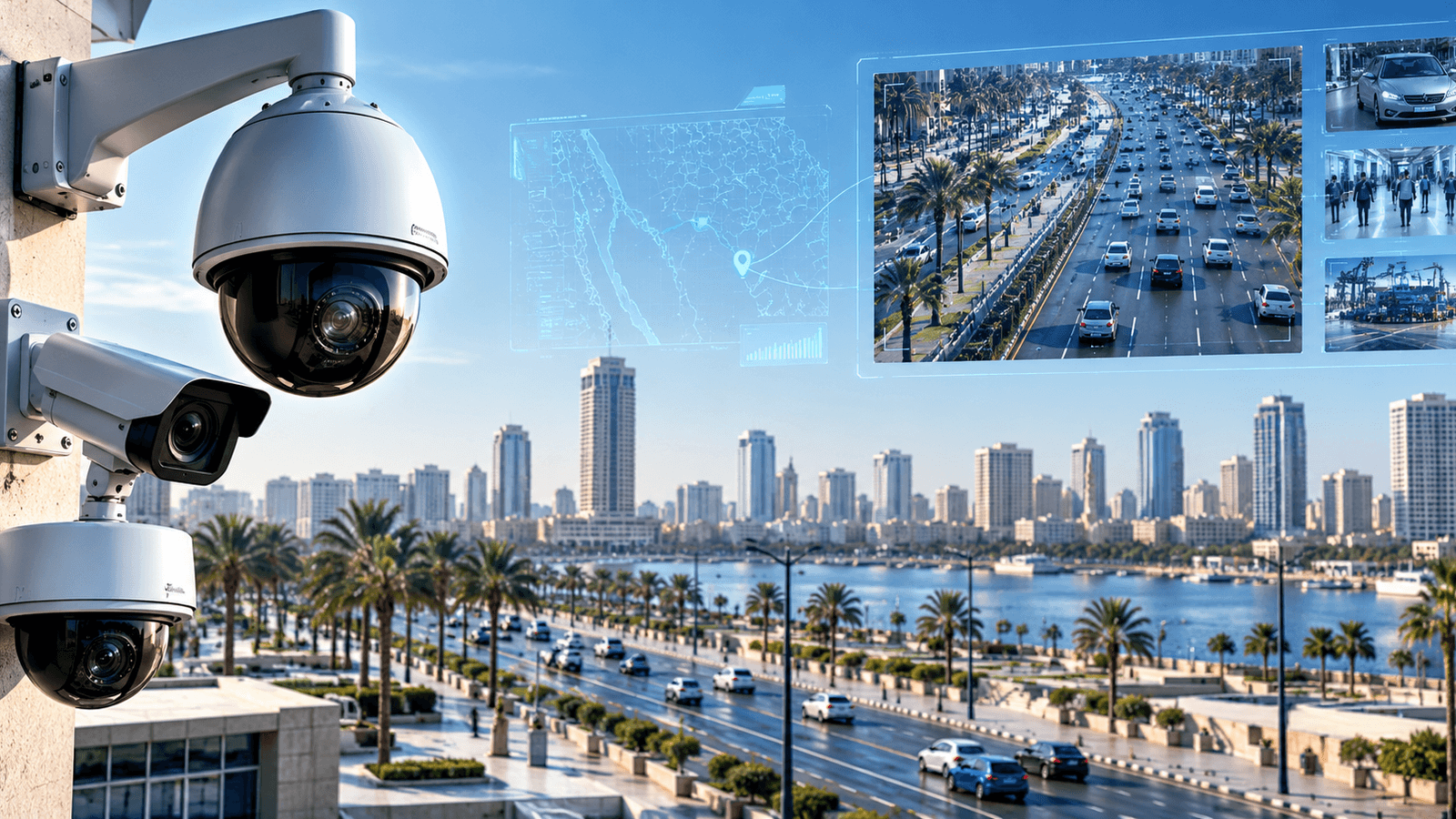
Overview
CCTV cameras and video surveillance systems are now a core part of modern infrastructure, industrial operations, public safety, transport, and large-site security. The value of a strong surveillance deployment comes from combining the right camera types with dependable networking, recording, monitoring, and response workflows.
In Egypt, these systems are increasingly relevant across public facilities, smart-city projects, industrial compounds, logistics environments, roads, campuses, utilities, and mixed-use developments. The challenge is not simply choosing a camera — it is designing a complete surveillance architecture that fits the site and can scale over time.
This guide explains the main technologies, deployment choices, and operating considerations in a practical way, with direct links to AIO civil brands and surveillance-related product areas.
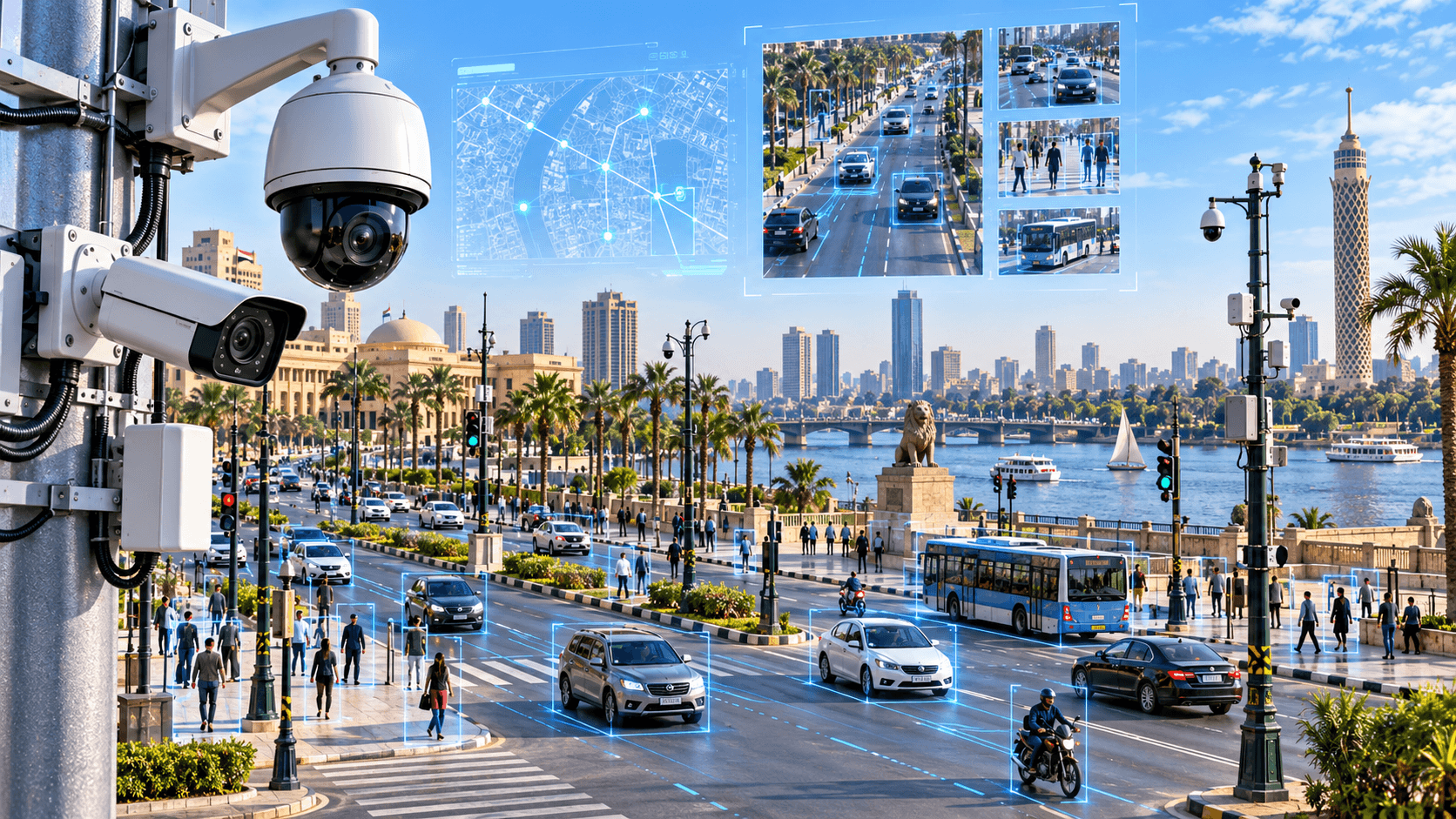
Urban CCTV surveillance on a Cairo boulevard
Why CCTV and video surveillance systems matter in Egypt
A modern surveillance project is about much more than placing a few cameras around a building. High-performing CCTV systems support public safety, operational oversight, incident review, perimeter protection, traffic visibility, and decision-making across large assets and urban environments.
For organizations in Egypt, surveillance technology is especially relevant where there is a need to protect distributed infrastructure, monitor strategic locations, improve control-room visibility, and create a reliable visual record of events. This applies to commercial developments, municipalities, industrial zones, logistics sites, campuses, utilities, and transport corridors.
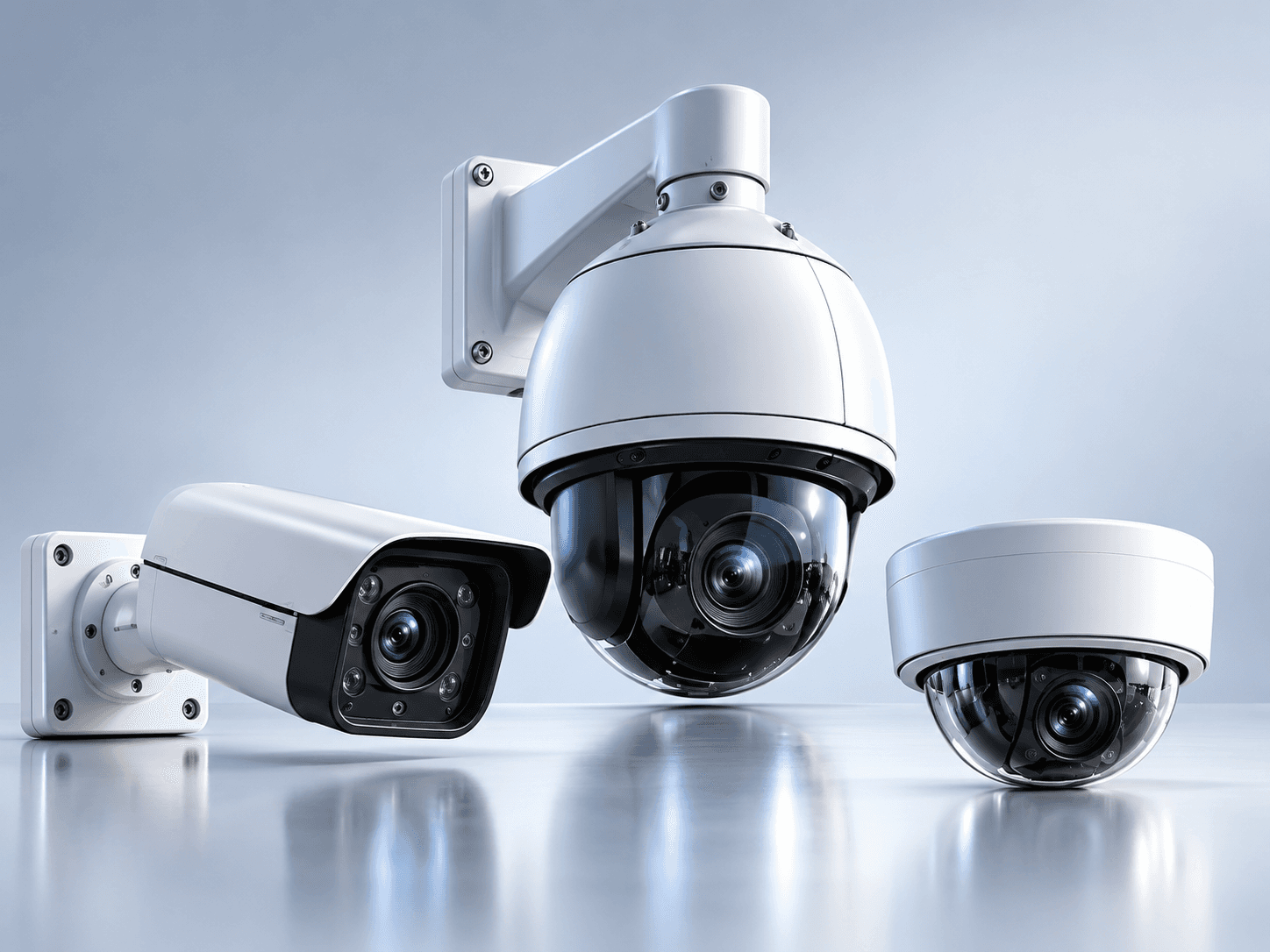
Different CCTV camera formats for surveillance projects
Main types of CCTV cameras
The best CCTV camera depends on the project objective, scene conditions, and installation environment. A strong system often combines more than one camera type so that wide-area coverage, detail, night performance, and operational flexibility work together.
- Bullet cameras: commonly used for outdoor perimeters, corridors, and long directional views.
- Dome cameras: widely used for indoor halls, entrances, offices, retail, and hospitality environments.
- PTZ cameras: useful when operators need pan, tilt, and zoom control for broad-area monitoring and active follow-up.
- Fixed IP cameras: suited to stable views, networked deployments, centralized recording, and analytics-ready environments.
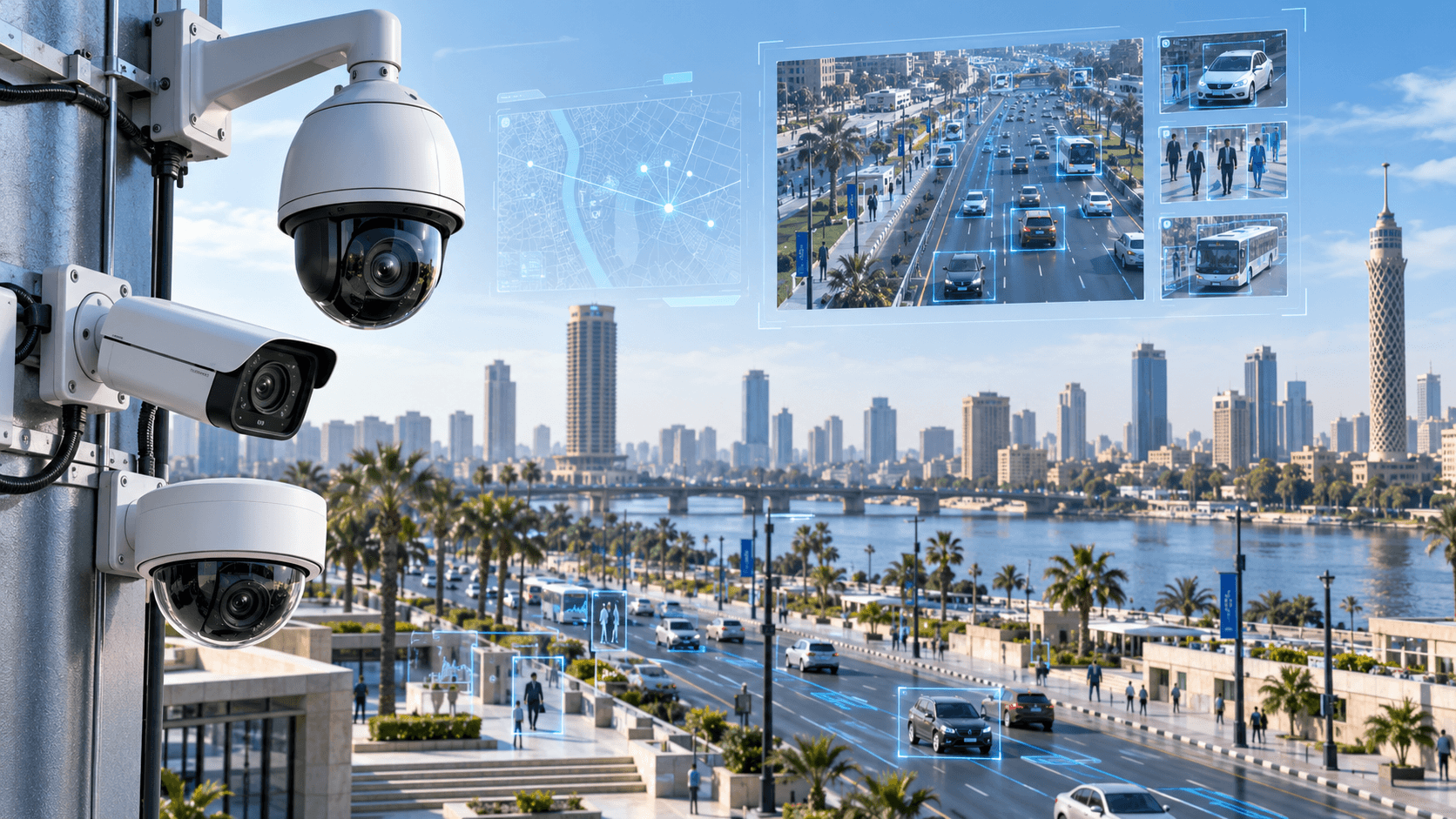
Networked IP surveillance in a smart-city environment
Analog CCTV vs IP camera systems
Analog systems can still be relevant in some legacy environments, but most modern projects increasingly favor IP-based surveillance because it is easier to scale, integrate, manage remotely, and connect with analytics and modern video-management platforms.
For organizations planning multi-site expansion, centralized monitoring, higher resolutions, or intelligent analytics, IP surveillance is usually the more future-ready architecture.
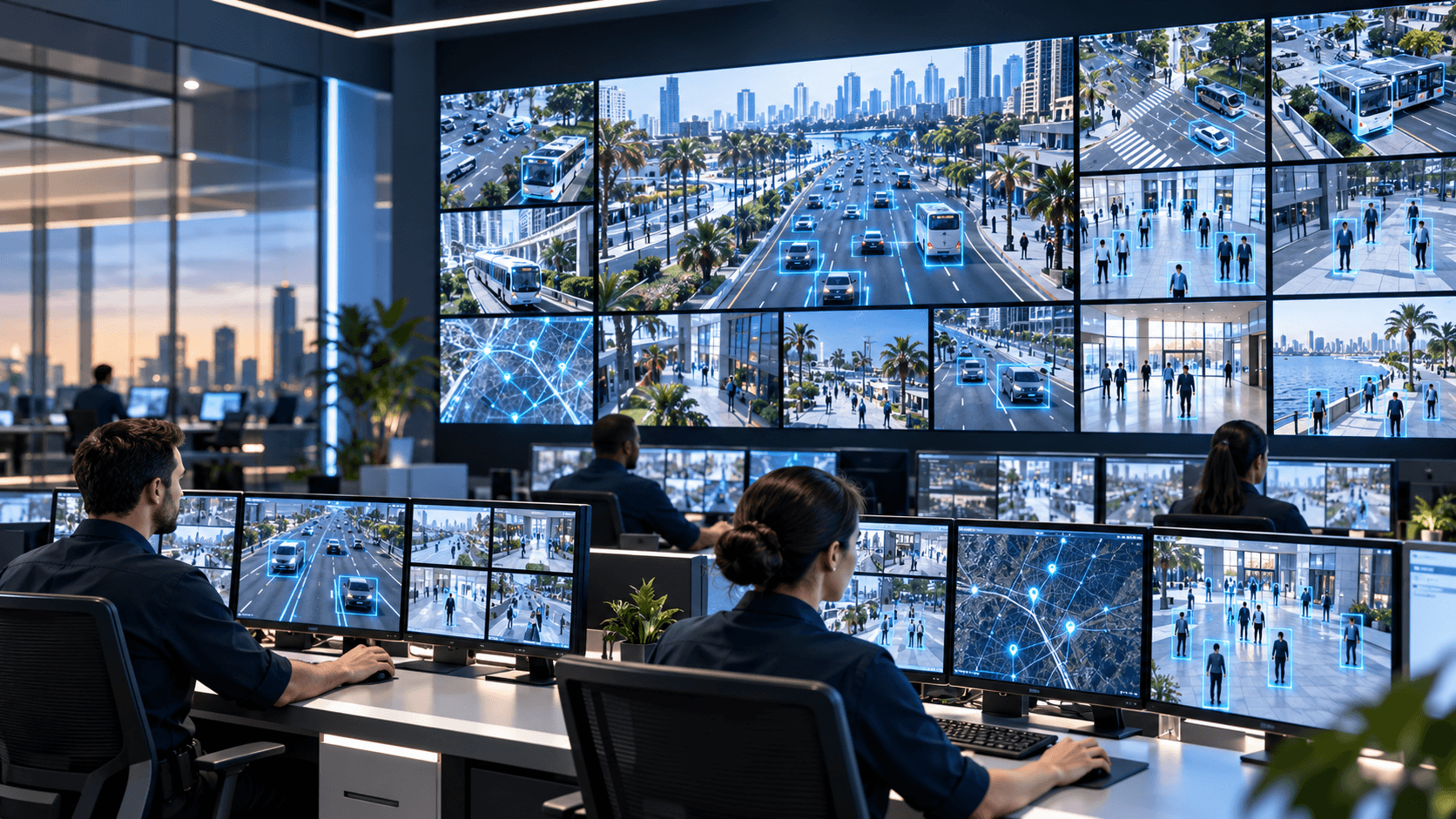
Control room monitoring multiple surveillance feeds
Core components of a complete surveillance system
A reliable deployment includes more than cameras. The overall performance of the system depends on how every layer is designed and integrated together.
- Cameras and lenses selected for the actual monitoring objective.
- Network design, structured cabling, switching, and power strategy.
- Recording and storage sized for required retention periods.
- Video Management System (VMS) for live viewing, playback, permissions, and event handling.
- Control-room workflows for incident review, escalation, and response.
- Maintenance, redundancy, cybersecurity, and future expansion planning.

AI traffic and video monitoring in Cairo
AI video analytics and smart-city surveillance
Many modern operators want more than passive recording. AI-enabled video can support object classification, people and vehicle counting, intrusion alerts, line-crossing detection, event-based search, and traffic observation. These capabilities can help teams surface relevant events faster and focus attention where it matters most.
In smart-city and infrastructure environments, analytics can support a wider operating picture that connects safety, mobility, and response readiness.
Integrated video management environment
Why ONVIF and VMS compatibility matter
Interoperability matters when cameras, recording systems, and management software need to work together. ONVIF-friendly planning can improve compatibility across supported devices and platforms, while a well-chosen VMS helps operators organize live views, search footage, manage permissions, and coordinate incident review.
Compatibility planning becomes even more important when a project is expected to grow or integrate multiple device types over time.
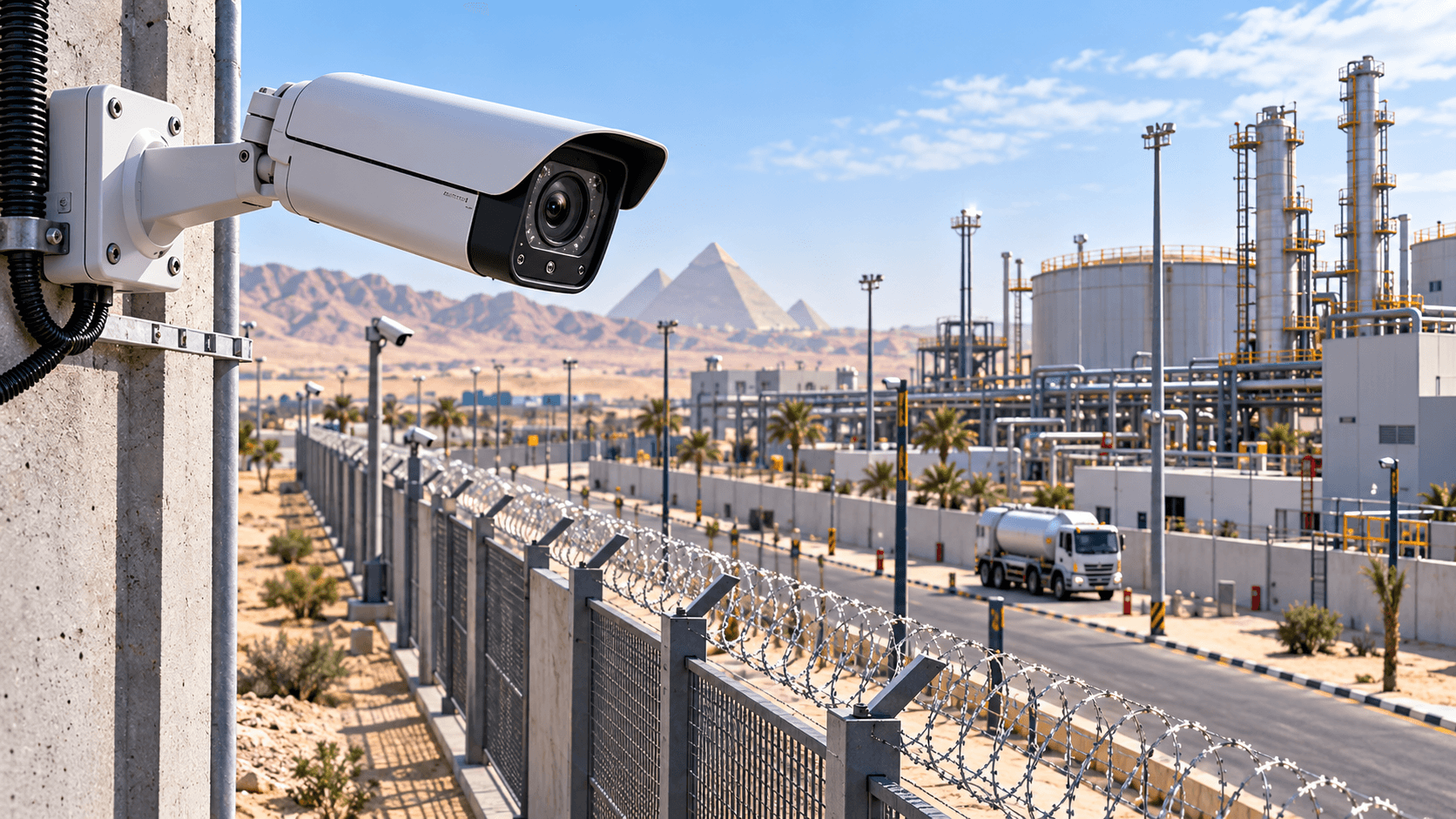
Industrial perimeter surveillance in Egypt
Industrial and perimeter security applications
Factories, utilities, logistics yards, and remote compounds often require weather-resistant equipment, long-range night visibility, dependable boundary coverage, and a mix of fixed and controllable cameras. Layered surveillance helps operators balance broad situational awareness with the ability to investigate detail when an event occurs.
Planning a scalable CCTV surveillance system
How organizations can choose the right surveillance solution
The right system starts with the mission. Before choosing products, organizations should define what needs to be protected, which events matter most, how the footage will be used, who will operate the system, and how the site may grow over time.
- Define the monitoring objective for every zone.
- Map lighting conditions, coverage distance, blind spots, and environmental factors.
- Choose camera types based on operational need rather than appearance alone.
- Align storage, retention, and VMS requirements with deployment scale.
- Plan for future expansion so the initial architecture does not become a bottleneck.
Visual Highlights
Article Gallery
Supporting visuals illustrating the surveillance environments and applications discussed in this guide.
Explore AIO
OpticVision Products & Solutions
Continue to the relevant OpticVision brand and product-category pages for detailed product information.
OpticVision
Explore the main OpticVision surveillance brand page and its complete product range.
Bullet Cameras
Explore fixed outdoor and perimeter cameras, including high-resolution AI-enabled models.
Dome Cameras
Browse compact dome cameras for indoor, commercial, institutional, and mixed-use environments.
PTZ Cameras
View long-range pan-tilt-zoom cameras for dynamic monitoring and wide-area surveillance.
ANPR Cameras
Explore automatic number-plate recognition cameras for traffic and controlled-access use cases.
Fisheye Cameras
See panoramic surveillance cameras designed for wide 360-degree visual coverage.
Network Switches
Browse managed network and PoE switching solutions for reliable IP surveillance infrastructure.
OpticVision VMS
Explore the video-management layer for centralized monitoring, control, and incident review.
Network Video Recorders
View NVR solutions for centralized recording, storage, and surveillance-system management.
Questions & Answers
Frequently Asked Questions
What is the difference between CCTV and video surveillance systems?
CCTV often refers to the camera-and-recording layer, while a complete video surveillance system can also include networking, storage, VMS software, analytics, user permissions, and operating workflows.
Which is better: analog CCTV or IP cameras?
IP cameras are usually better suited to modern scalable projects because they support stronger networking, centralized management, and analytics integration. Analog systems can still be useful in some legacy environments.
What type of CCTV camera is best for outdoor use?
Outdoor projects commonly use bullet or PTZ cameras, depending on whether the priority is fixed directional coverage or operator-controlled wide-area monitoring. The right choice depends on distance, lighting, weather exposure, and the monitoring objective.
Why is ONVIF important in surveillance projects?
ONVIF helps improve interoperability between compatible cameras and management platforms, making integration and future expansion more flexible.
How can organizations in Egypt choose the right surveillance system?
Start with the site objective, coverage needs, lighting, recording requirements, operator workflow, and future expansion plan. Then design the camera, network, storage, and management layers around those requirements.
Contact AIO
Need help planning your project?
Contact the AIO team to discuss your site, application, product requirements, or technical questions.